Chimney Leaking When It Rains in Portland, OR
Water showing up around your fireplace during a Portland rainstorm almost never comes in where the stain is. Here is where chimney leaks actually start, why they worsen every Portland metro winter, and how we find the real source before we quote a fix.
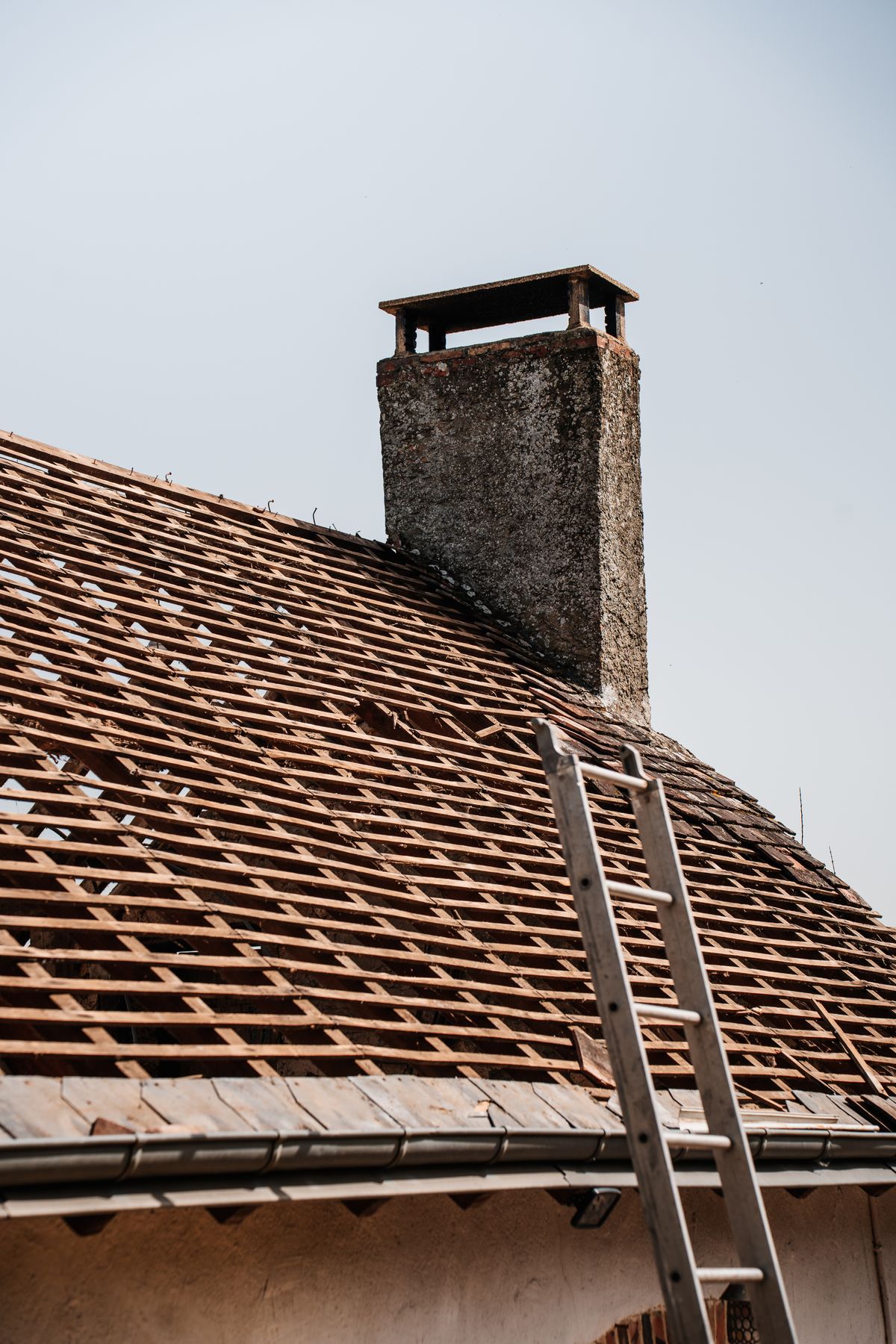
The Five Places Chimney Leaks Actually Start
A water stain rarely sits under the hole that let the rain in. Water enters high, runs along flashing, framing, and masonry, and drips wherever it finally lets go. After 20-plus years of chasing chimney leaks, we check the same five suspects, in this order.
- Flashing — the metal seal where the chimney meets the roof. It is the most common source we find, and the fix is proper chimney flashing repair, not another layer of tar.
- The crown — the concrete slab capping a masonry chimney. Hairline cracks send water straight into the brick below, and crown repair stops it at the top.
- A missing or rusted cap — with no cap, rain falls straight down the flue in every storm. A properly sized chimney cap is the simplest fix on this list.
- Saturated brick — masonry is a sponge, and after months of valley rain the wall itself can wick water indoors. Breathable chimney waterproofing is the answer once the brick gets a chance to dry.
- Condensation in an unlined flue — sometimes the leak is not rain at all. Flue gases condense inside an old unlined chimney and soak the masonry from within, which points to relining, not roof work.
Why Leaks Get Worse Through a Portland metro Winter
Portland does not get one big storm and then a month to dry out. From October into May the rain comes steadily, so a chimney that starts taking on water in the fall stays wet for half the year. Brick that never dries keeps wicking moisture deeper with every system that rolls through.
Then a cold snap hits. Water sitting in hairline cracks freezes, expands, and opens those cracks a little wider, and the next rain has an easier way in. That is why a faint ceiling stain in November is often a dripping firebox by February — chimney leaks do not hold steady, they compound.
Why Caulk-on-Top Fixes Fail
The most common repair we undo is a bead of caulk or a smear of roofing tar over the flashing. It looks sealed for a season, but caulk over failed flashing does not fix the joint — it hides it. Water finds the next gap, and now it is also trapped behind the patch, rotting the roof deck out of sight.
The same goes for painting brick with an off-the-shelf sealer. Most of them form a film that traps moisture inside the masonry, and the freeze-thaw damage that follows is worse than the original leak. Flashing has to be reworked in metal, crowns rebuilt in concrete, and brick treated with a breathable repellent — surface caulk is not a substitute for any of it.
How We Trace the Leak Before We Quote
We do not quote a leak from the driveway, and we do not guess from a photo of the stain. We start at the top and work down — cap, crown, flashing, mortar joints, brick condition, then the flue interior — until we can show you the actual path the water is taking.
Once we know the source, you get a free written estimate for that specific repair before any work starts. Qualifying repairs carry a written quote before any work, which we can only stand behind because we fix the cause instead of covering the symptom. If two problems overlap — a cracked crown over saturated brick, say — we will tell you which one is letting the water in and which one can wait.
Chimney Leak Help Across Portland and the Mid-Portland metro
We are a service-area chimney and fireplace company — we come to you, from Portland and Vancouver to Beaverton, Hillsboro, Lake Oswego, Woodburn, Gresham, Tigard, Milwaukie, Camas, Tualatin, and West Linn. We work on every chimney type: masonry, prefab, wood stoves, and fireplace inserts.
We are open 8am to 10pm Sunday to Thursday, and we hold 500+ customer reviews and a 5.0 rating on Google. If your chimney is dripping right now, in the middle of the storm, call (503) 758-1555 and we will get eyes on it.
FAQs
Why does my chimney only leak when the rain is heavy or wind-driven?
Light rain sheds off the roof before it finds a gap, but hours of wind-driven rain pushes water sideways into flashing seams and soaks the brick until it wicks through. That pattern usually points to flashing or saturated masonry rather than an obvious hole. It also means the leak is active more often than you notice — the drywall hides it until enough water collects.
My roofer offered to caulk around the chimney. Should I do that?
Caulk over failed flashing is a patch on top of the problem, and in valley weather it typically opens up again within a season or two. Worse, it can trap water behind the patch, where it rots the roof decking out of sight. The lasting fix is reworking the flashing itself — that is metalwork, not sealant.
How much does it cost to fix a leaking chimney?
It depends entirely on the source — a cap, a crown crack, flashing, and saturated brick are all different repairs. We trace the leak first, then give you a free written estimate for the specific fix before any work starts. Qualifying repairs are backed by our written quote before any work.
Is a leaking chimney an emergency?
It rarely floods a room, but it never fixes itself — water quietly rots framing, rusts dampers and fireboxes, and breaks down mortar all winter long. The earlier we trace it, the smaller the repair. We answer the phone 8am to 10pm Sunday to Thursday, so call when you spot it, storm or not.