Gas Fireplace Glass Going Black or Foggy
Black film on the inside of the glass is not cosmetic and it is not normal. It is carbon, and carbon means the fireplace is burning incompletely - which is worth fixing for reasons beyond the view.
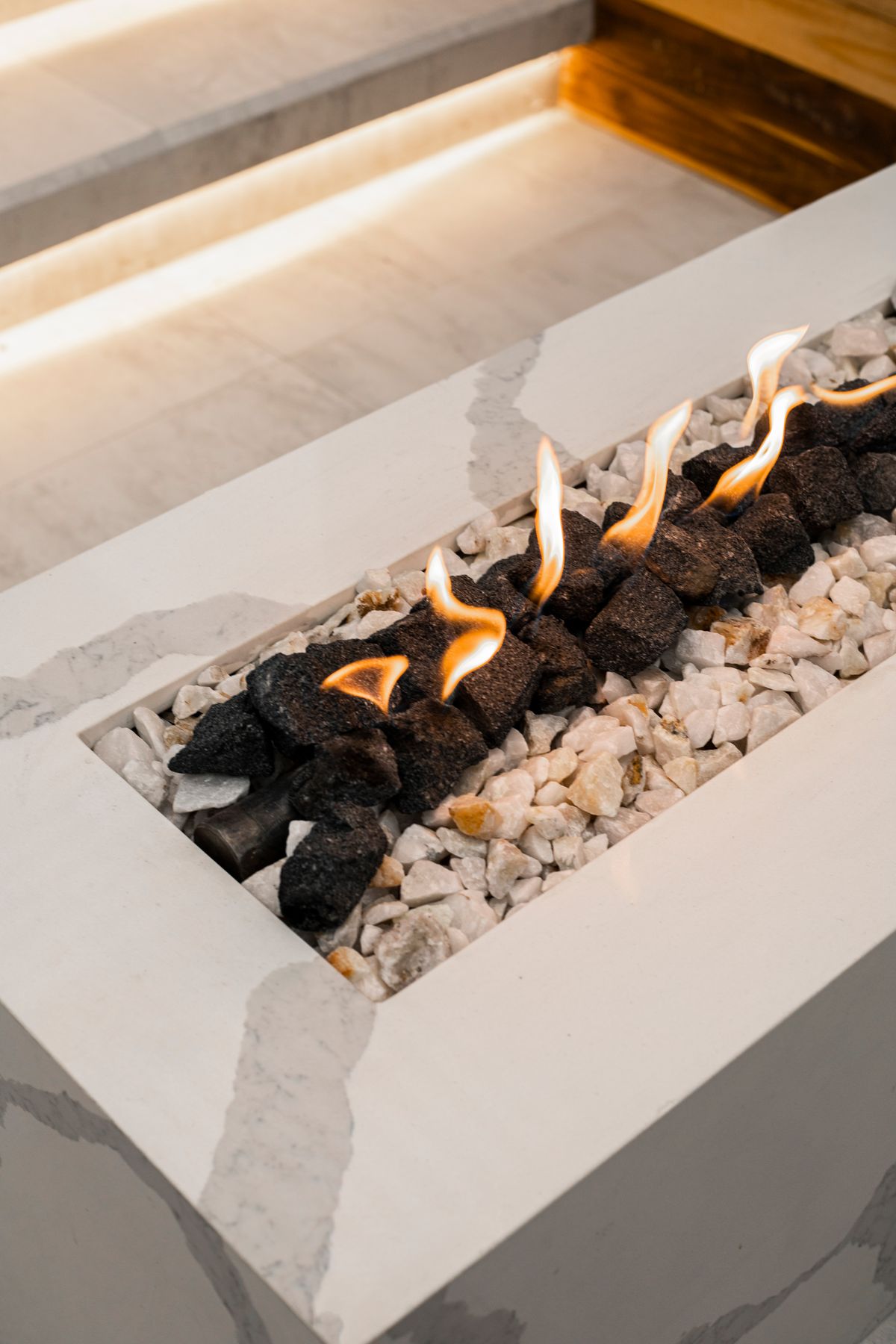
What the black film actually is
A gas flame burning cleanly is mostly blue with yellow tips and leaves nothing behind. When the flame cannot get enough air, or when it strikes something solid before it finishes burning, it deposits unburned carbon — soot. That soot lands on the coolest surface in the firebox, which is the glass.
So sooty glass is a symptom. The useful question is not how to clean it, it is what is making the flame burn dirty.
The causes, most common first
Logs out of position. By a wide margin the most common cause. Every gas log set has a manufacturer's layout, and it is not decorative — it is engineered so the flame burns clear of the logs. Move a log a few centimetres and the flame strikes it, quenches, and throws carbon. This is why logs pulled out for cleaning and put back by eye so often start a sooting problem.
Blocked burner ports. Debris, rust or spider webbing narrows the ports. The flame goes lazy, orange and starved.
Air shutter out of adjustment. The shutter controls how much air mixes with the gas before it burns. Too little air, and the flame cannot complete combustion.
Restricted venting. On a direct-vent unit the sealed intake and exhaust must both be clear. A blocked or partly obstructed termination starves the flame and sends combustion products the wrong way.
Wrong fuel configuration. A unit set up for natural gas and run on propane, or the reverse, without the correct conversion kit, will soot immediately and badly.
Why this is worth taking seriously
Incomplete combustion is the same condition that produces carbon monoxide. On a sealed direct-vent unit the combustion chamber is isolated from the room, which is a real safety margin — but on a vent-free set or a unit with a compromised seal, sooting is a warning worth acting on rather than wiping off.
If you have a CO alarm and it has ever sounded, or anyone in the house gets headaches or feels unwell when the fireplace runs, stop using it and have it looked at before anything else.
Cleaning the glass is the last step, not the first
You can clean the glass — when it is completely cold, with a cleaner made for fireplace glass, never an abrasive and never on a hot pane. But if nothing else changed, it will be black again within weeks.
On a service visit we photograph the log layout, compare it to the manufacturer's diagram, reset the logs to spec, clean the burner ports, check the air shutter, and verify the venting is clear. The glass gets cleaned at the end — after the reason it went black has been dealt with.
FAQs
Can I just clean the glass and carry on?
You can, but it will come back, because the soot is a symptom rather than the problem. More to the point, the same incomplete combustion that blackens glass is what produces carbon monoxide - it is worth knowing why it is happening.
I moved the logs to clean it and now it soots.
That is the single most common cause we see. The layout is engineered, not decorative. Putting the logs back to the manufacturer's exact pattern usually fixes it outright.
Is a little yellow in the flame normal?
Yellow tips are normal and are what give a gas fire its realistic look. A flame that is mostly yellow, lazy and lifting away from the burner is not - that is a starved flame and it is what deposits carbon.
Does sooty glass mean carbon monoxide in my house?
Not necessarily. A sealed direct-vent unit keeps combustion isolated from the room. But it does mean the unit is burning incompletely, and on a vent-free set or a unit with a damaged seal that matters. If a CO alarm has sounded, stop using it and call.